Wind Runners finally got a demo as part of Steam’s Next Fest, allowing players to try not only the game’s tutorial, but also get a taste of how its rogue-like mission structures plays. For those not aware, Wind Runners blends elements of Shoot ’em up with rogue-lite progression, all neatly wrapped in perhaps one of the best visual styles seen in games.
Each level starts with an objective, with some having unique enemies for you to fight. Once you complete a scenario, you get to choose your next one, and decide the goals you want to work on. You are also rewarded with upgrades, which allow you to either modify your existing attacks or add new abilities altogether for your current run.
The visuals are definitely worth calling out of course, with beautiful hand-drawn art composed of striking parallax backgrounds and crisp particle effects that look cinematic and impactful. However, what stood out to me is just how well it complements the gameplay. Water trails shoot behind you as you skirt the waters, projectiles and missiles leave behind a trail of smoke, and explosions pop in satisfying bubbles of fire.
What especially stood out to me from a design perspective was how it takes videogame “juice” and cranks it up to eleven. I can spend days gushing about videogame “juice”, but nothing does a better job explaining than the classic grapefrukt video below that every designer has perhaps seen at least once in their careers. Essentially, these are readable effects of your actions that help make the gameplay feel responsive.
In Wind Runners for example, every explosion results in a shake that rattles the entire scene and narrowly dodging through projectiles very briefly slows down time. The result is action that feels stimulating because the game constantly responds to the player. Every hit has weight and feedback. The cluster missiles are a good example of this, and seeing them shoot out around you as they bend towards your target is extremely satisfying.
When all these different elements, from the art to the responsiveness of the gameplay, come together, the result is a visceral spectacle of bullets and explosions that brings the game violently to life.
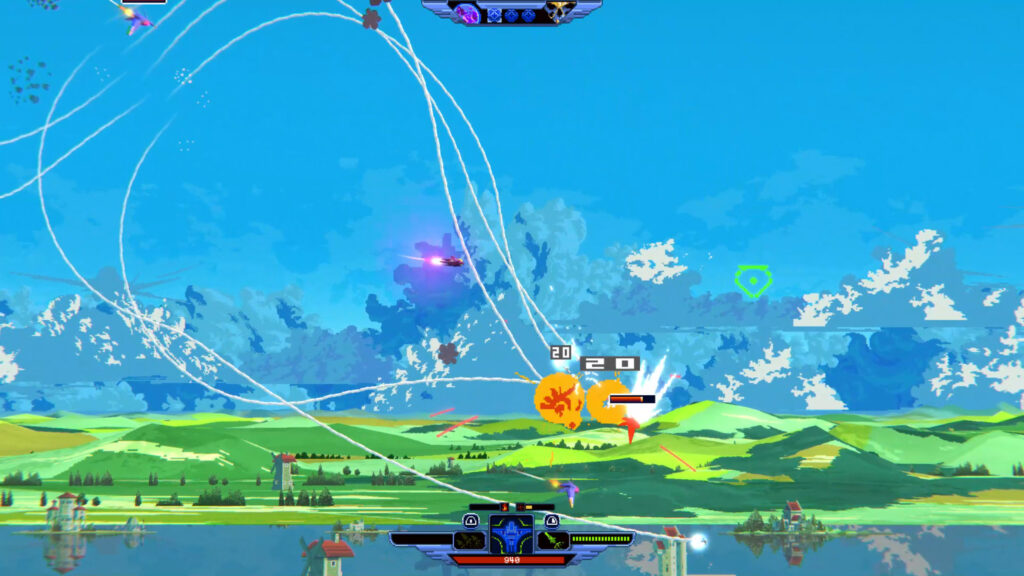
The only thing that stood out for potential improvement is the game’s difficulty, with the onslaught of never-ending enemies making it hard to identify important enemy archetypes and draw up meaningful strategies. This is one aspect that can be tweaked to prevent the game from turning empowerment into desperation.
Despite that, I cannot recommend Wind Runners enough to anyone who loves rogue-lites, Shoot ’em ups, or flight combat games like Star Fox or Ace Combat, whose influence it proudly wears on its presentation, speed and spectacle.
We can’t wait to play more when it releases in Steam Early Access this September. It is quickly becoming an expensive month for video game fans, with major releases like Marvel’s Wolverine on PlayStation 5 and Remedy’s Control Resonant also arriving within the same window, but if Wind Runners’ demo is any indication, it will easily earn its place on that crowded calendar.