The moment you begin a round of KAZ, you will not want to stop. “One last run” will turn into “one more run” and minutes will turn into hours as its simple four-button controls pull you into an increasingly chaotic loop
KAZ is a fast-paced roguelike that can be played with just three fingers. Across five modes, it features more than 145 quests and over 100 items, while its music grows more intense as each run descends into a score attack symphony.
In the main game mode, each round is short, and you are tasked with earning enough points before the timer runs out. You move in four directions, and deal with 2 types of enemies, one that gets destroyed with you running into them, while others have to be pushed into walls. Hitting a shield will push you back but destroy it in return, revealing an enemy beneath, whilst traps can hurt you.
These might feel simple on their own, but with the timer in play, KAZ forces you to be more deliberate about how you move and approach enemies, so that you don’t waste time. Different modes offer different challenges and there’s even a relaxed mode where time only moves when you do.
KAZ forces you to be more deliberate about how you move and approach enemies, so that you don’t waste time.
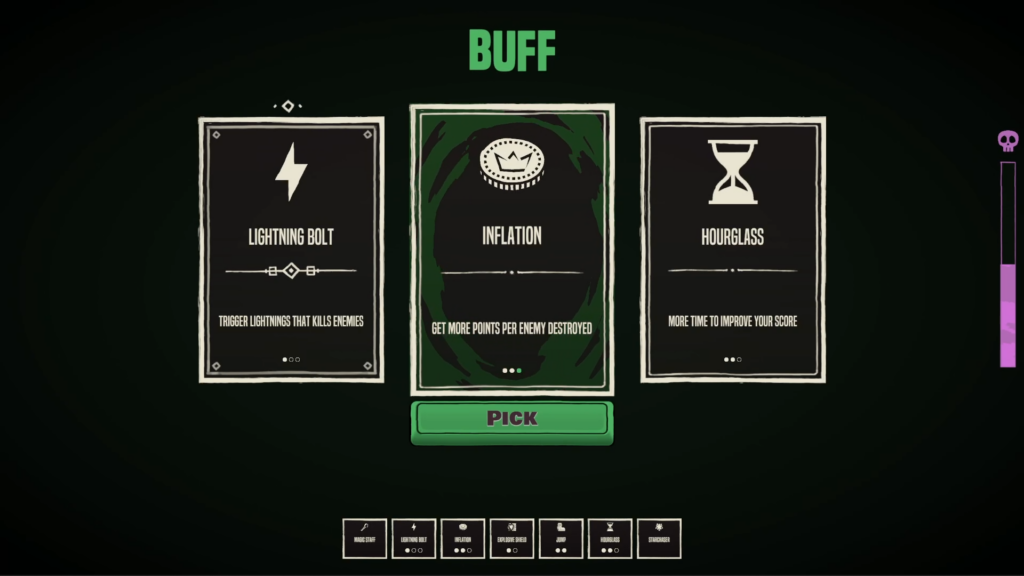
Between rounds you will get to choose from a selection of buffs. What makes buffs especially meaningful is how they synergise with each other, naturally encouraging thoughtful builds rather than random selection. The infection buff for example fills the board with enemies when the round start, and Rush Mode allows you to race across the grid to quickly clear them all for a strong head start.
Spell buffs add another layer to the player’s strategy, where you can enter precise directional combinations to activate different abilities, such as explosions, laser attacks and manipulating your remaining time. Helldivers’ stratagem feature is a useful comparison to understand how they work.
Curses on the other hand debuff the player, forcing you to accept debuffs from a list after you get far enough into a round. They can hinder a run in various ways, such as reducing points you collect or making a player randomly teleport around the map.
The combination of these buffs and curses continually change how you approach the board and prevents the players from getting too comfortable with the loops. This helps not only the replayability of the game, but also keeps it from getting repetitive or stale.
The one thing I do think the game could have done better however, is separate spells from regular buffs, as they feel far more active. Giving players the ability to unlock spells with gold and equip a selection before each run would have offered more choice, added player agency and prevented runs from feeling too heavily driven by RNG, which can cause some of them to be frustrating.
What makes buffs especially meaningful is how they synergise with each other, naturally encouraging thoughtful builds rather than random selection.
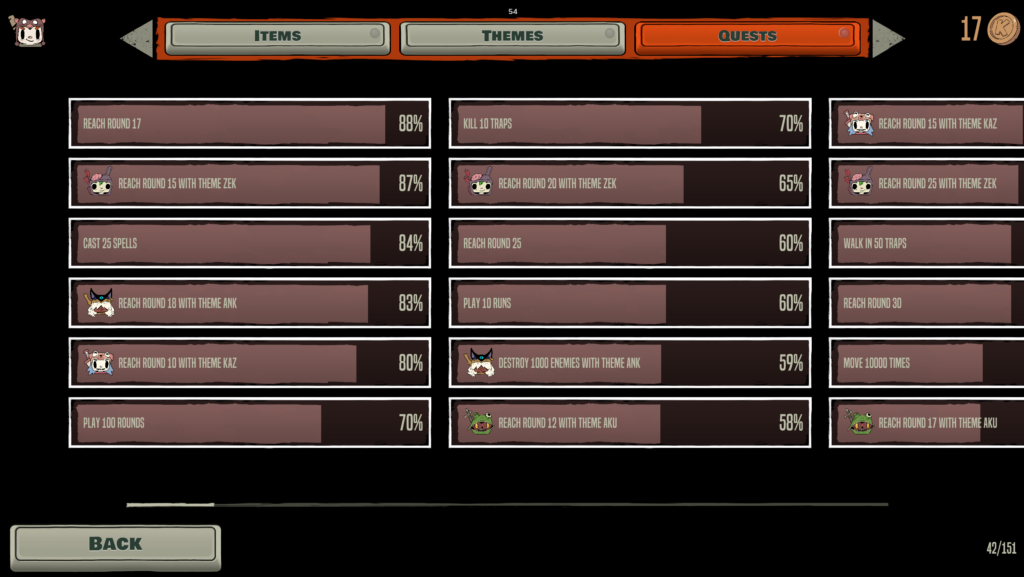
KAZ also uses quests as its progression system, where rather than simply giving you coins for playing rounds, you complete challenges such as reaching certain rounds, defeating X number of enemies or even stepping into X amount of traps. The game’s quest menu makes this easy to track, and you can see your progress within these goals.
The reason KAZ’s progression works better than traditional rewards is that it creates multiple overlapping goals. Even when the main run ends or fails, the player will have advanced several quests, and moved closer to another reward. This contributes to the “one more run” aspect of the game, where rewards always feel within reach.
Coins can be spent on new themes, each bringing a new character with their unique ability. As an example, the starting character KAZ can cause explosions at the end of the round, whilst ANK shoots four way lasers.
The reason KAZ’s progression works better than traditional rewards is that it creates multiple overlapping goals. Even when the main run ends or fails, the player will have advanced several quests, and moved closer to another reward.


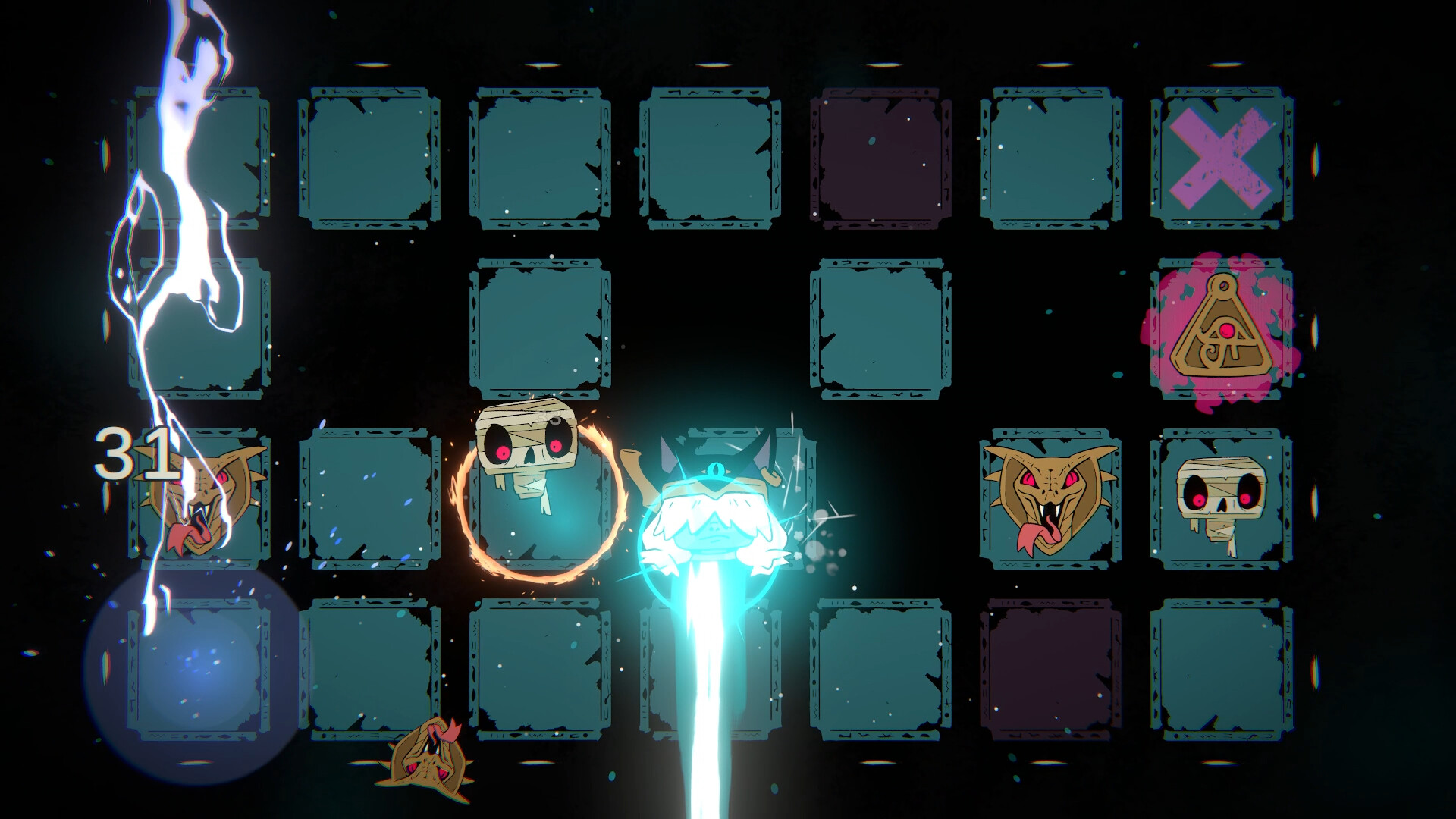
Each character also brings a distinct theme and background music that is reflected in their enemies: KAZ faces clowns and ghosts, the Egyptian-inspired ANK encounters mummies and snakes, while the post-apocalyptic PIK battles mutant rats and hazmat-masked enemies. With over 25 interesting themes to unlock, it provides players with a healthy amount of aspirational unlocks that feel fun to experience.
KAZ manages to connect multiple gameplay systems into an addictive loop, where its accessible controls give way to constantly evolving systems that give players meaningful choices and plenty to unlock and master. However, its over-reliance on RNG can make certain runs frustrating.
Review Summary
KAZ manages to connect multiple gameplay systems into an addictive loop, where its accessible controls give way to constantly evolving systems that give players meaningful choices and plenty to unlock and master. However, its over-reliance on RNG can make certain runs frustrating.
- Addictive "One More Run" Gameplay
- Great Pick Up and Play Experience
- Plenty of Rewards and Quests To Complete Over 5 Modes
- Exciting Original Music
- Relies Too Much on RNG